How a Kenyan Community United to Solve a Water Crisis
Story by Donna Atola, Kenya Field Communications Specialist
In Turkana, a deep thirst for water shaped children’s entire world. But their Hope Center’s simple act — listening — brought healing where it was most needed, showing that sometimes, the most profound answers are found in the children's voices.
As a child, did you feel listened to? Were your suggestions taken into consideration? The Lokori Hope Center found a powerful solution to a crisis by intentionally listening to young people.
Lokori is a small village in Turkana, a hot and arid region in northwestern Kenya. This part of the country endures years of drought and scorching temperatures, sometimes rising to 105 degrees Fahrenheit. Rain is scarce and unreliable, making life incredibly difficult for a community that relies on a seasonal river that crosses the village from the highlands for water.
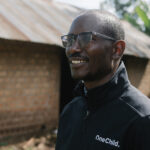
Seventeen years ago, OneChild partnered with a local church in Lokori to set up a Hope Center, where children were registered. Before the partnership, most children in the community never attended school, says Justus, a Child Champion at the Hope Center.
No Education for the Kids
The lack of water in Turkana is linked to other challenges, including the lack of education. The Turkana community was traditionally a herding community, with most families owning a large number of cattle. Frequent droughts and the scarcity of water and pasture forced them to travel long distances in search of sustenance for their livestock.
Herding is primarily a task for the men in the family, who pass this tradition down to the young boys. Older men take the boys along on herding trips. As they mature, the boys gradually transition from herding younger goats and sheep to managing all the cattle, allowing the older men to remain home.
Because of this responsibility, boys were not allowed to attend school, as they were needed to care for the cattle, the community’s most treasured property.

Herding, a traditional role of a Turkana boy (by Donna Atola)
On the other hand, the community perceived girls as a source of wealth through marriage, where the men paid the girl’s family dowry in the form of cattle, often hundreds. Unfortunately, this culture objectified the girls, and families would offer them to the wealthiest man for marriage regardless of the girl’s age.
Most times, older men would approach a family requesting to deposit dowry for a girl, even when she was under 2 years old, effectively “booking” her. These girls were marked using colorful beaded necklaces and married off as soon as they reached adolescence, sometimes even before.
In the desire to preserve their culture, the community was against their children getting an education. They believed that educated boys wouldn’t care for the family’s wealth, while educated girls wouldn’t attract a substantial dowry during marriage.
Marginalization of the Community
While the animals provided sustenance, they also brought conflict. The community has frequently clashed with neighboring communities over banditry, resulting in the loss of both cattle and lives. These losses exacerbated poverty within the community, making an already difficult situation even more challenging.

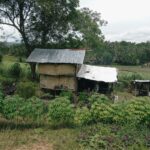
A boy in front of his village in Kenya (by Donna Atola)
Another problem was that previous governments marginalized the community, hindering their access to essential social amenities such as hospitals, good roads and government services. In addition, the community struggles with limited access to schools.
Over a decade ago, Justus says, accessing a hospital for even minor illnesses meant families had to travel over 96 miles to Lodwar on a rough, rocky road. The round-trip cost approximately $12 per person, an expense most couldn’t afford. Even then, this single journey would take more than a day due to the limited number of vehicles traveling that route.
Children in this community suffered the most under these harsh conditions.
With banditry pushing many families into poverty, they were often fortunate to have even one meal a day, and sometimes they went days without food. Even when food was available, it was usually just nutrient-poor corn flour porridge, leading to widespread malnutrition and hunger among children.
The Hope Center in Lokori
Establishing the Hope Center in Lokori brought this struggle into sharper focus. “I remember registered children would bring their siblings with them to the Hope Center on Saturdays,” Justus says. This occurred despite the policy of registering only one child per family, which was intended to extend the impact of the child sponsorship program to more families.
He continues, “But we couldn’t turn away the unregistered children. We knew they came for the food, so we found a way to share. This also meant they had to participate in the program and learn, which was a positive outcome.”
Gradually, through nutritious meals and regular medical checkups provided by the Hope Center, the children’s health improved. The Hope Center also offered parents training in alternative livelihoods beyond cattle herding.

Photo by Lokori Hope Center
Besides informing parents about income-generating activities, the Child Champions also trained and helped them establish Chalmers Savings groups. This initiative followed a partnership between OneChild and The Chalmers Center, which provided the Champions’ training curriculum.
In these savings groups, members meet weekly for worship, Bible study and prayer before each member contributes a set amount of money, which they then save collectively. Members can borrow from the group to invest in businesses, pay school fees and address other household needs. Additionally, the meetings serve as a platform to educate parents about the importance of education.
A Thirst So Deep
Despite all the efforts to provide hope for the children, a significant challenge persisted within the community: the lack of access to clean water.
The Hope Center staff asked children to bring 2 to 3 liters of water with them on Saturdays. This was not unusual in the community, as children were also required to carry water and firewood to school daily to help with cleaning and cooking.
Having observed this system in local schools, the Hope Center adopted a familiar approach. This meant children had to wake up early to fetch water from the River Kerio, a seasonal river flowing through the area.
He adds that the situation worsened during prolonged droughts when the river dried up, making water even harder to find.
Water Scarcity
Water was scarce at the Hope Center and in the wider community. During the day, when the river was dry, it was common to see women pulling 20-liter jerry cans of water with metal wires across the dry, hot, rocky ground under the scorching sun.

Kenyan woman pushing a jerry can with her foot (by Lokori Hope Center)
This strenuous task was necessary due to the long distances, sometimes over 5 miles, between their homes and the water sources, and the high temperatures made the journey exhausting. Plus, the water that the women fetched was often insufficient for the entire family, meaning the children had to fetch more water in the evening after school.
Catherine, 14, a sponsored girl at the Hope Center, recalls her experience.
I don’t remember concentrating in afternoon classes because I was always thinking about fetching water after school,” she says.
“I would delay doing my homework and would do it squatting by the fire at night because I spent the whole evening fetching water and only finished when it was dark. We have no electricity at home.”
But she says it was necessary, or else her family wouldn’t be able to prepare dinner.
Waterborne Disease
The long distance wasn’t the only water-related problem; the community also suffered from waterborne diseases. The river, the closest water source for most homes, was unclean due to people swimming and cattle drinking in it. Unfortunately, this contaminated water was the most accessible option for some families.
To address this issue at the Hope Center, leaders consulted with parents and decided to pool resources and hire a water bowser, or tanker. One 10,000-liter bowser cost the parents $50 and lasted approximately 10 days, resulting in a monthly water expense of around $100.
Even with the bowser, water had to be used sparingly, primarily for drinking and cooking. The children still had to fetch water from the river to clean classrooms and toilets. Sometimes, the bowser deliveries were late or didn’t arrive at all, forcing the center to use scooters to transport water.
Naro, 14, a boy at the center, remembers this situation well.
We would have our meals late because water wasn’t delivered on time, and we wanted to clean our classrooms better, but water was limited,” he recalls.
“As part of the agriculture club, I always wanted a kitchen garden at home and at the center, but there wasn’t enough water for that.”
The water scarcity persisted until a few years ago, when the local government connected tap water from a community well miles uphill from the village.
This water was accessible at a central point for the community. Individual home connections required private funding. However, despite this improvement, the Hope Center still relied on water bowsers because it lacked a direct connection.

Photo by Lokori Hope Center
The Power of Listening
To gather feedback on the program, the Hope Centers engage in an annual systematic listening exercise, where the youth, leaders and Child Champions anonymously answer a questionnaire to voice their opinions. This activity is called the Voice of the Youth.
In 2023, the youth at Lokori provided feedback that indicated they did not enjoy attending the center. In response, the champions convened a meeting with them.
During the discussions, Justus reported that the lack of water was the primary reason for their dissatisfaction.
Naro says, “The situation had improved, but it wasn’t ideal. The limited water supply meant we couldn’t drink as much as we wanted because we all had to share.”
Justus presented this feedback to the leaders, who then organized a parents’ meeting, inviting local community leaders to help find a solution. At the meeting, parents volunteered to contribute $1 each toward water pipes and plumbing services. Those unable to contribute financially offered to dig trenches for the pipes. Extra funds collected would cover the connection fee to the local authority.

Kids enjoying fresh water (by Lokori Hope Center)
Through these collective efforts, the caregivers successfully mobilized the necessary resources and connected water to the center’s tank. This has significantly improved the overall experience at the center, and the youth now enjoy being there.
Catherine is happy that the appearance of their center will soon change from bare ground to a place with trees.
Growing up in a community where children are often expected to be seen and not heard, both Naro and Catherine are happy that Hope Center allows them to voice their opinions and feel heard.
Justus appreciates the importance of listening to the children at the center and urges other Child Champions to embrace this practice.
Justus also believes that open communication and active listening strengthen the relationship between children, caregivers and Child Champions, leading to a more cohesive and supportive community.
The simple act of listening in Lokori not only quenched a physical thirst but also nurtured a sense of belonging and empowerment, proving that the voices of children hold the key to profound change.

Help Build More Hope Centers
You can give kids in hard places a safe place to play, learn, and flourish. Even a small gift makes an incredible difference. Help launch a new Hope Center today!
Learn More