The Language of Belonging
By Donna Atola, OneChild Kenya

By Donna Atola, OneChild Kenya
It’s a sweltering day in June when I arrive at Children First Hope Center in Lodwar, Turkana, a hot, arid region in northwestern Kenya. I made the journey from Nairobi to learn more about Josephine’s harrowing story. With me are two OneChild colleagues and Simon, a teacher who understands sign language.
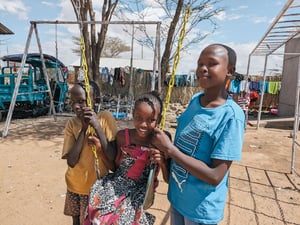
Kids playing at Children First Turkana (photo by Laundry Mudamba)
It is midday, and the temperature has climbed to 88 degrees Fahrenheit. As we move toward the shade, Rev. Faith, the Hope Center Director, sends for Josephine.
Josephine, now a young woman, has been folding clothes in the dormitory during Kenya’s midterm school break, when many children return home from boarding school.
The center hums with the joyful chaos of a family home during school vacation. Under one tree, older children practice dance moves to music playing from a phone. Nearby, younger children run after chickens as they play hide-and-seek. In the middle of it all, Josephine arrives with a calm smile.
At first she is reserved, but only until she realizes that one of the visitors is Simon, who has come as an interpreter for our interview.
In an instant, Josephine changes.
Her eyes widen and her smile spreads. Then her hands begin moving quickly as she pours out greetings, questions and stories in the language that lets her fully express herself.
As each of us introduces ourselves, Josephine watches the translation carefully, then smiles and gives every person a name sign of our own. This small gesture shows how she is engaging with the world around her and inviting us into her world.
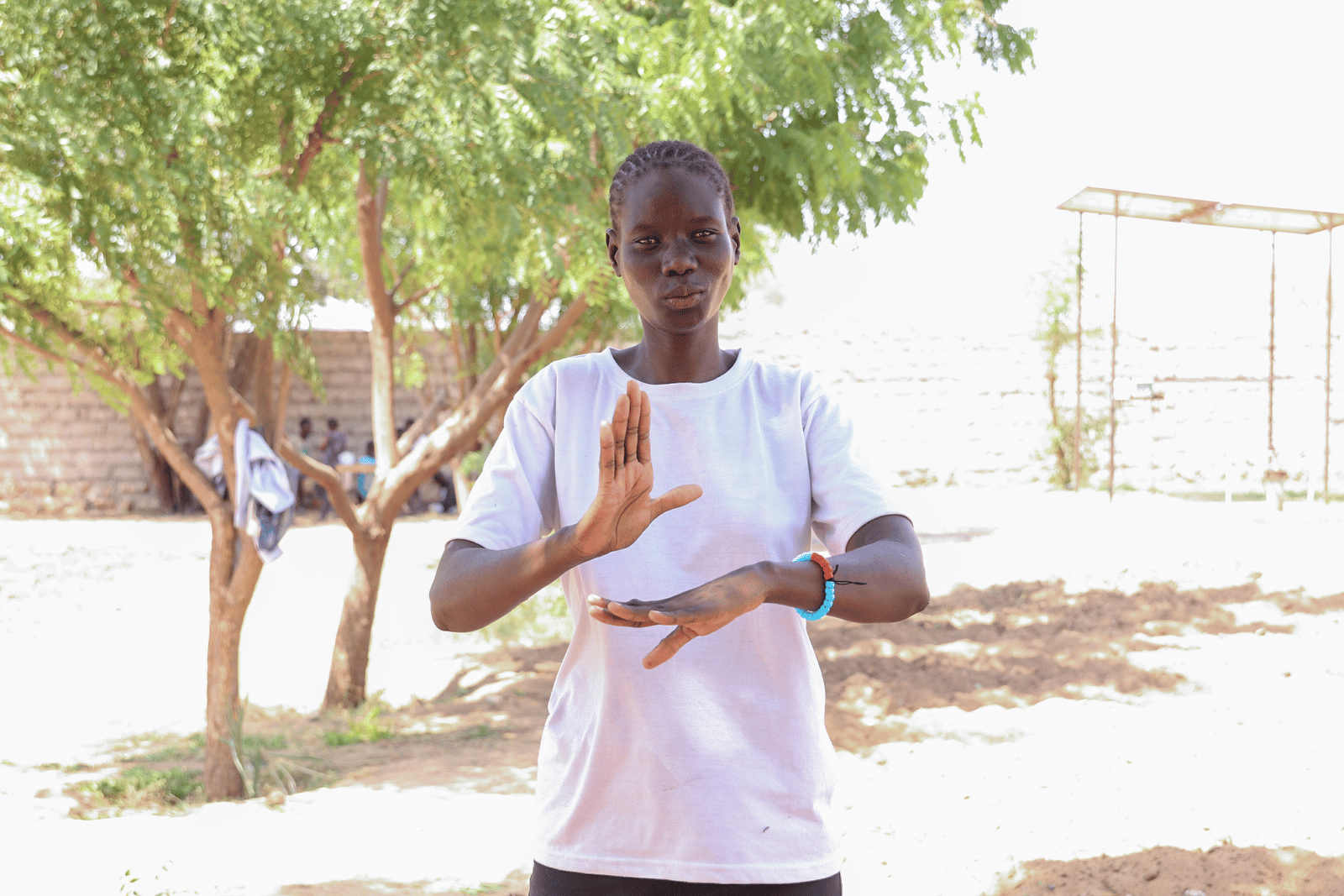
Josephine communicating in Kenyan Sign Language (KSL) (photo by Donna Atola)
Josephine’s story begins about 20 years ago in Kalokol, a small fishing village on the western shore of Lake Turkana. She was her parents’ first child. When she was still a toddler, her mother realized Josephine was deaf.
In a community with limited understanding and few resources for children with disabilities, her family did not know how to respond. Eventually, her parents separated, and little Josephine was left in the care of her father and paternal grandmother.
Her father later remarried, and Josephine grew up with four stepsiblings. Her father’s work as a cook at a local public primary school secured a place for Josephine there. But the school was not equipped to teach a child who was deaf.
From her earliest years, Josephine had to invent her own way of being understood by the people around her.
“I mostly had to point to things when I needed them,” she tells me. “I had to figure out how to use my hands and specific gestures to communicate with my family members. I taught my grandma, my stepsiblings and my father, so they understood what I was saying.”
Because Josephine lacked specialized support in her early years, she wasn’t enrolled in school until about 7. Even then, she did not have the opportunity to learn Kenyan Sign Language (KSL) until she was a teenager.
Turkana County stretches across 27,644 square miles, yet it has only two schools for children who are deaf. The nearest one was in Lodwar, about 46 miles from Josephine’s village. For a family already struggling to survive, that distance seemed insurmountable.
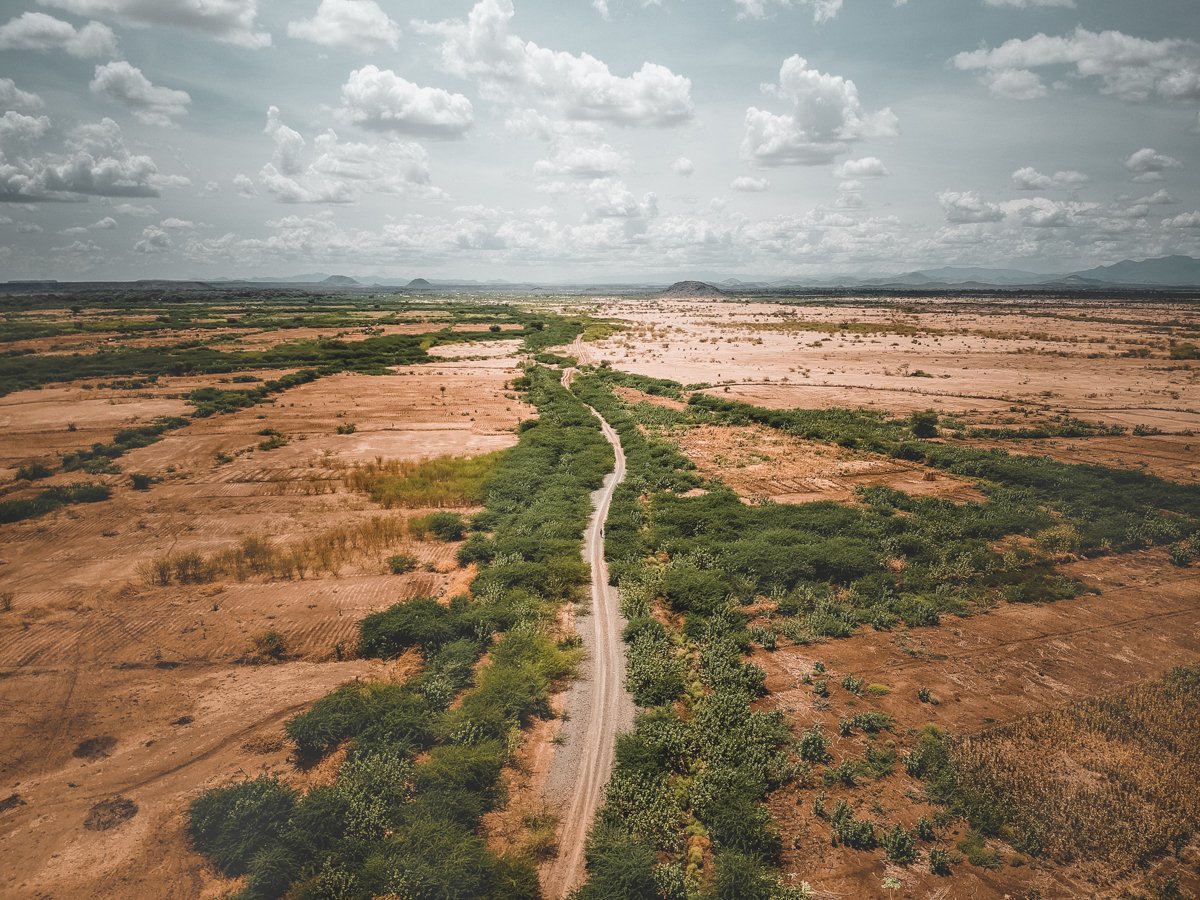
The arid landscape of Turkana in northern Kenya (photo by Davey Gravy)
Then, in 2020, Josephine’s father became ill, and his condition worsened quickly. The family could not afford to travel to Lodwar for the advanced care he needed, and he died. Following his burial, Josephine’s stepmother left with the other children. Josephine remained with her aging grandmother, who could no longer walk.
Still a child herself, Josephine became a caregiver. She helped her grandmother bathe, carried her outside to sit in the sun, and searched for food for both of them.
“I had to drop out of school because, apart from not being able to afford school fees and school supplies, I felt bad when my grandmother, who was sick, had to sleep hungry every evening,” she says. “So, I figured it would be easier to stay home, look for firewood and go around the village begging for food. No one could give me a job because they knew I could not communicate in a language they understood.”
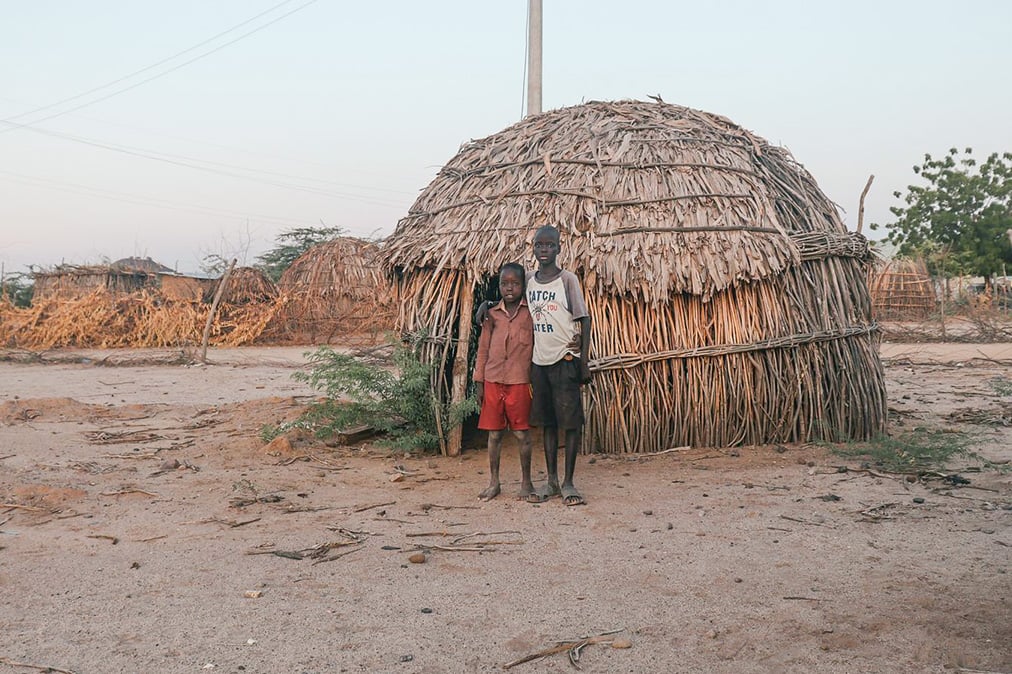
A family home in rural Turkana (photo by Donna Atola)
Eventually Josephine’s grandmother grew stronger. At that time Josephine’s aunt from Lodwar came to visit. Seeing Josephine’s situation, she brought her to Lodwar and enrolled her in the primary school for deaf children.
But when Josephine’s aunt received word that her mother — Josephine’s grandmother — was ill again, she returned to Kalokol in a panic to care for her, leaving Josephine alone in Lodwar.
Josephine had no way to communicate with relatives back home and no one to care for her in town. She tried to stay in school, but she also had to find food and shelter. She asked neighbors for help, but over time, some grew tired of her and turned her away.
One day, while she was searching for food, Josephine met Esther, the sister of Rev. Faith, director of Children First Hope Center. Esther tried communicating with Josephine through writing and realized the young girl needed food and a safe place to stay. She took Josephine by the hand and brought her to Rev. Faith at the Hope Center.
Some Hope Centers operate differently to meet the specific needs in their communities. Children First is not only a Hope Center, but a home where abandoned and vulnerable children are cared for and given a chance to begin again.
After coming to Children First, Josephine returned to the school for the deaf. She sat for her primary school exams, passed, and was admitted to a high school for students who are deaf in Kericho, 241 miles from Lodwar. She is now in her third year.
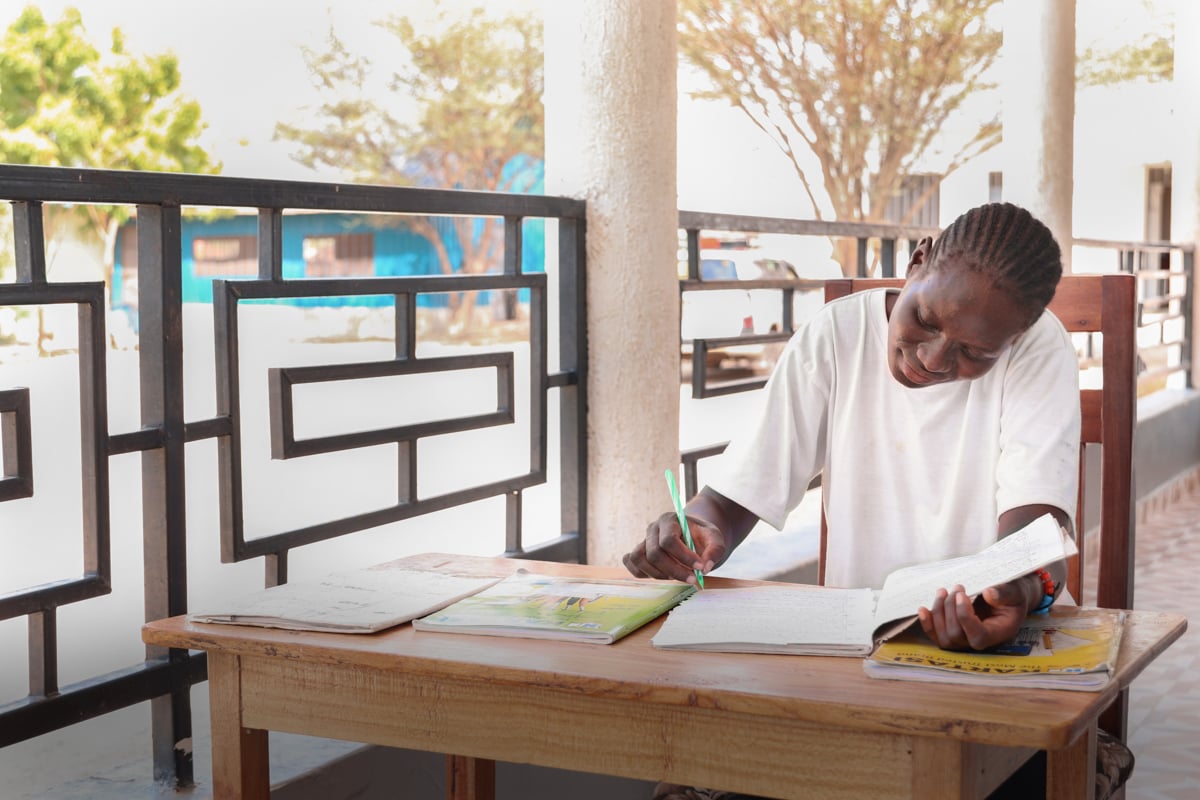
Josephine doing her homework (photo by Donna Atola)
Today, Josephine loves business studies, physics and geography. She dreams of becoming a seamstress and owning a clothing shop. She also plays volleyball and participates actively in the sport at school.
Josephine says that when she first joined the Hope Center she struggled to communicate with the other children. But unlike her early years in Kalokol, this time she had a language to share.
“I started teaching some of the children the alphabet in sign language,” she says with a smile. “With time, some of them learned how to communicate with me.”
During school holidays, Josephine reads, helps with chores around the home and, lately, has discovered a love for dancing.
For Rev. Faith, the recent partnership with OneChild first meant practical support through sponsorships — children could attend school, live more comfortably and receive the care they needed to build a future.
But through OneChild’s new Bridgely platform, she began to see something even more personal happen.
Josephine is sponsored by Susan, who understands American Sign Language (ASL). For Faith, that connection felt almost unimaginable. In the old sponsorship model, a girl like Josephine could receive letters, photos and support — all meaningful gifts. But a visual connection with a sponsor who could sign back to her was something different.
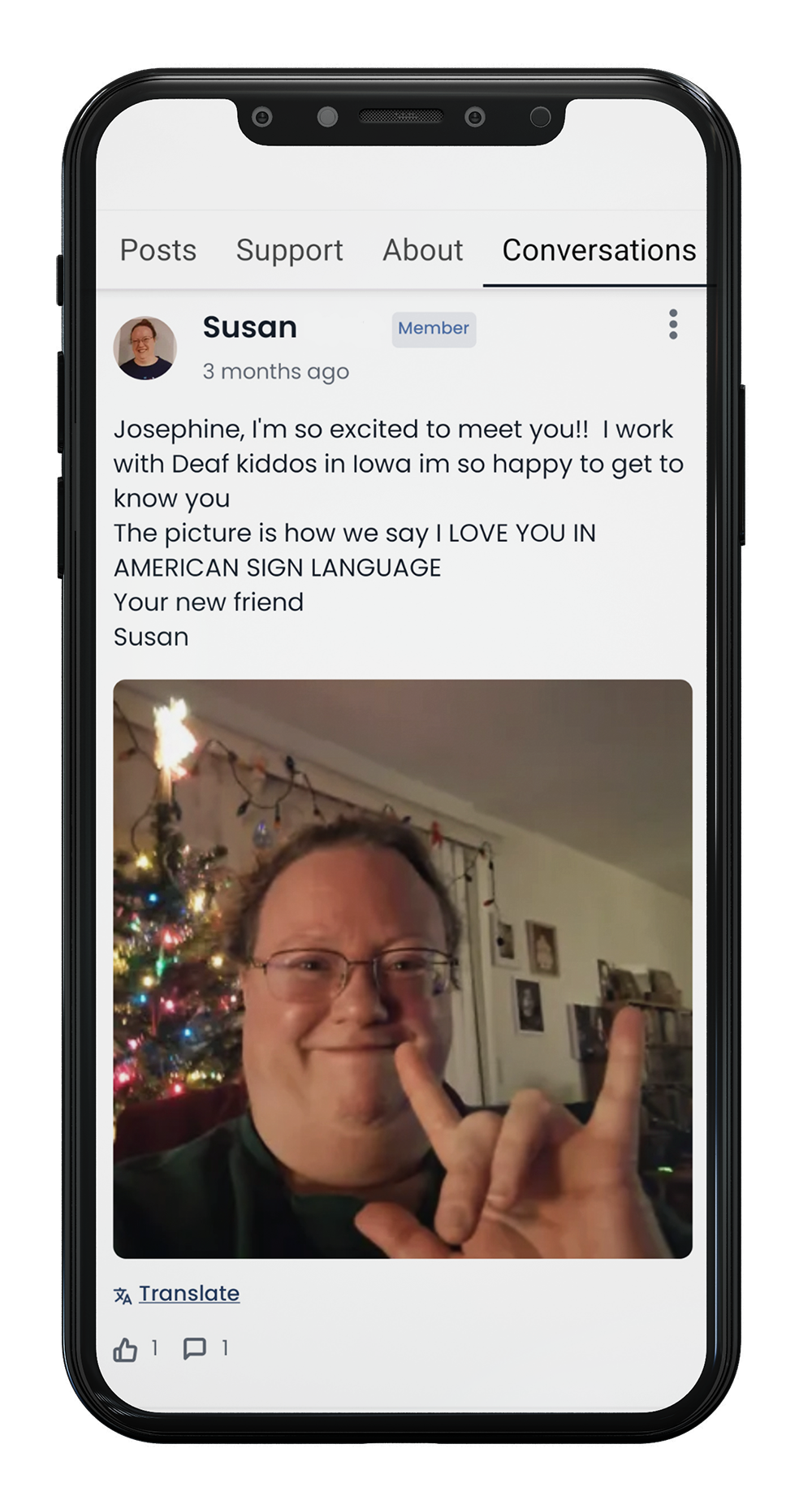
Susan’s first message
“The connection with her sponsor was amazing because Susan knows sign language and is excited to learn Kenyan Sign Language from Josephine, too,” Faith says.
Faith adds, “Everybody enjoys a connection with someone they can understand. For Josephine, after being rejected because she was deaf, finding someone who accepts her, loves her and is excited to hear from her is something very special.”
Through Bridgely’s video-sharing feature, Susan can send encouragement that Josephine can see, and Josephine can reply in her own language. Their relationship is not limited by distance, disability, or the delays of traditional communication.
Watch the joyful messages between Susan and Josephine and learn more about Susan and the Circle of Hope helping Josephine thrive.
“She was doing well, but after the sponsorship, she became more alive,” Faith says. “I see the joy on her face when she watches a video or sends one to Susan. She knows she is loved and cared for because she can see and understand it in the videos.”
As I ask Josephine about Susan, her face brightens again. What does she love most about her sponsor? Josephine does not hesitate.
“She is very thoughtful,” she says. “Even when I am away at school, she sends me videos that I enjoy watching. She has also asked me to teach her a few Kenyan Sign Language signs, and I love sending her those videos.”
When Faith first met Josephine, she did not hesitate to welcome her into the Hope Center. Resources were limited, and the needs in the community were many. But Faith knew children with disabilities often face even greater risks.
“I can’t tell what would have happened to her if she had not met my sister, who brought her to me,” Faith explains. “In this community, when children lack supportive adults who care for them, they are at risk of drug abuse, dropping out of school and living on the streets, where they can be exposed to further abuse. For girls, there is also the risk of early pregnancy. For children with special needs, the threat is even greater.”
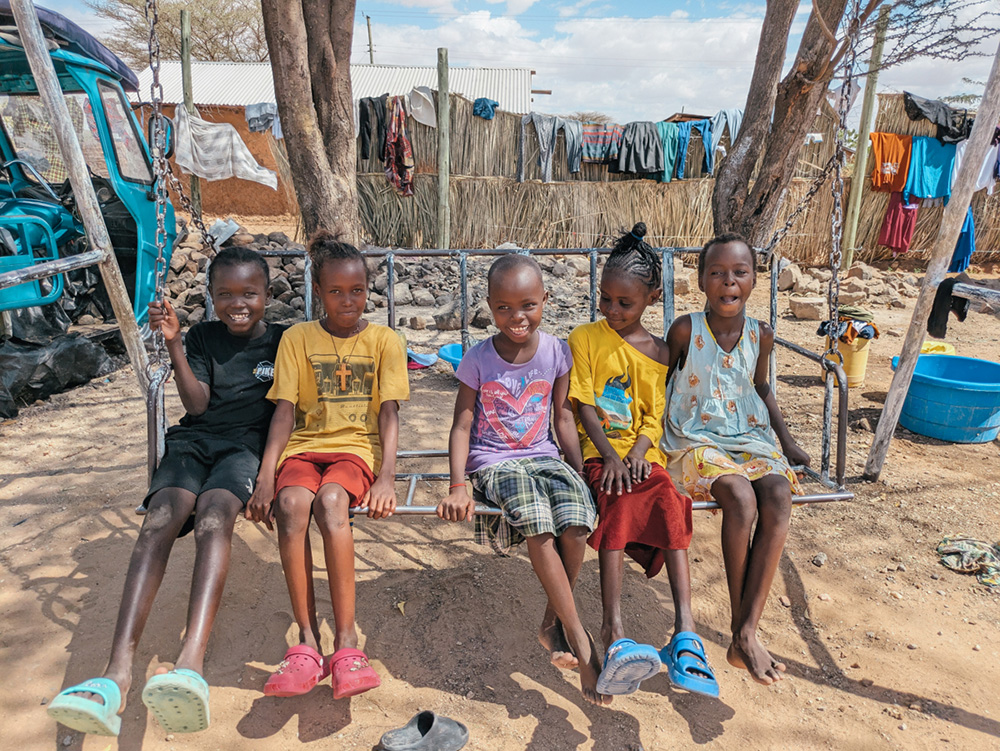
Children have the security of a home at family at Children First Turkana (photo by Laundry Mudamba)
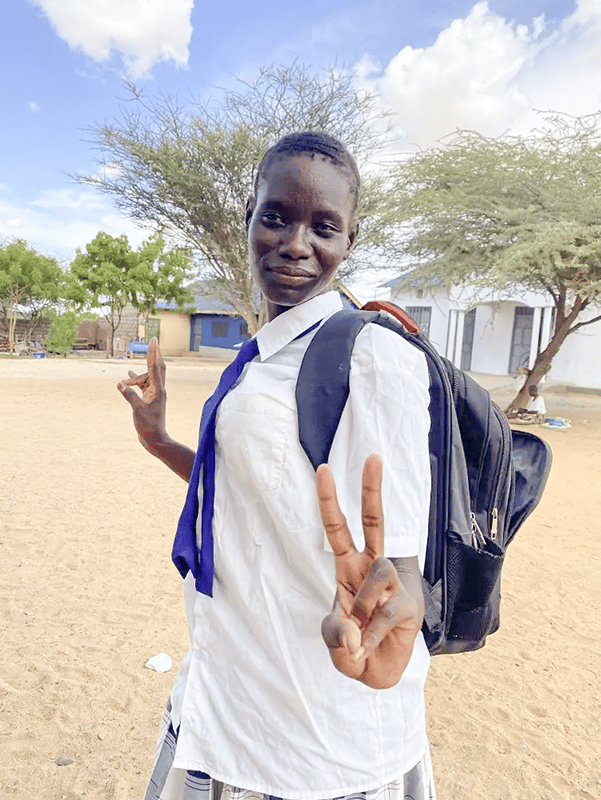
Josephine in her school uniform
For many children, joining the Hope Center is a second chance. Most were abandoned or rescued from the streets. Here, they receive food, shelter, education, and the caring presence of adults who believe their lives matter.
Faith is especially passionate about girls like Josephine. A second chance, she says, does more than keep a child safe. It gives her permission to dream beyond what her community may expect of her.
“I was born in this community, and I remember growing up, girls were raised to dream only of becoming wives of doctors, teachers or people with good careers,” Faith says. “But I want the girls here to dream of becoming the people with good careers. That is why this ministry is so dear to me.”
Josephine’s story shows what is possible when sponsorship becomes more than a name on a profile or a letter sent across continents.
And under the shade of a tree in Turkana, as Josephine’s hands move with confidence and her smile widens, the impact becomes clear. Susan is not only helping Josephine stay in school, she has taught her that she is seen, heard and loved.
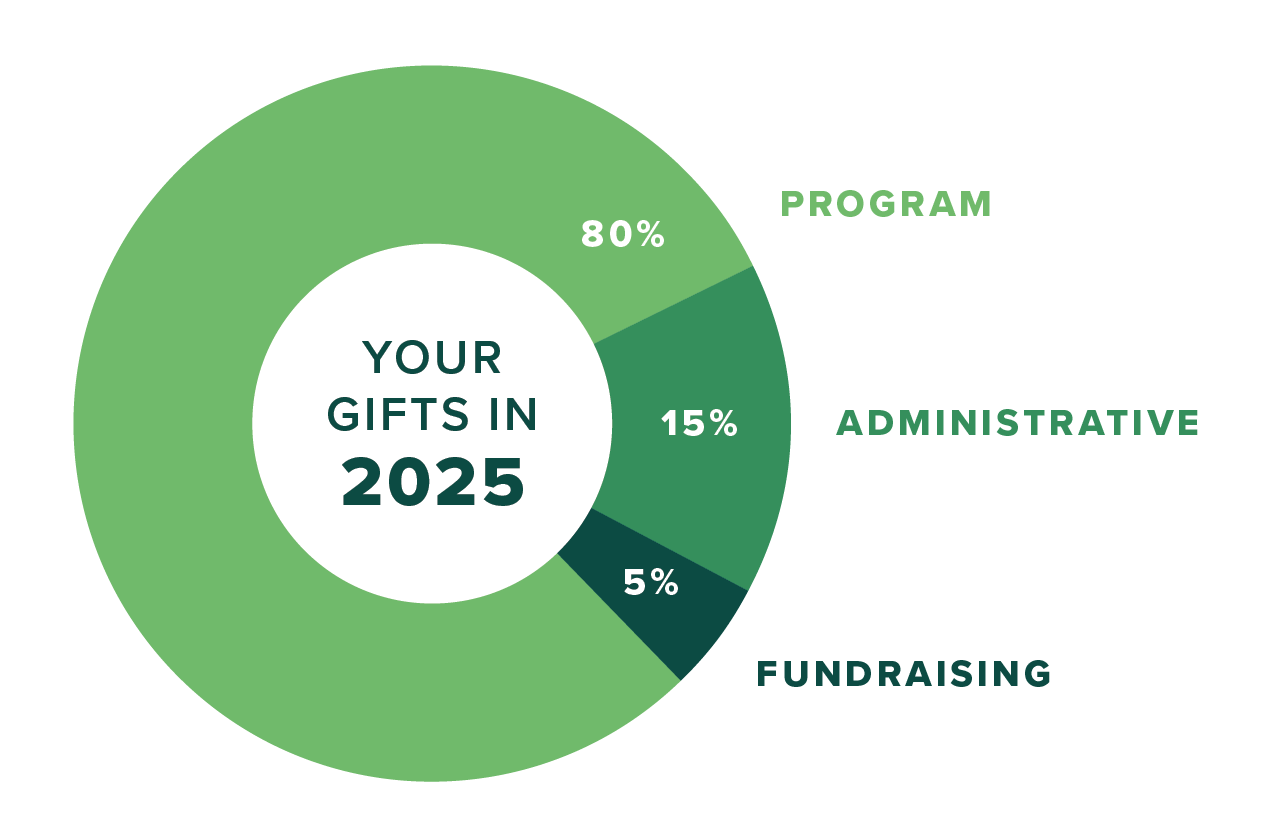
Our accountability to our donors is one of our highest priorities. Our goal is to use the funds entrusted to us as wise stewards. Doing so requires continued monitoring of our fund distribution. OneChild is also a member in good standing with the Evangelical Council for Financial Accountability (ECFA), has a four-star Charity Navigator rating, and has the Affinity Seal of Compliance.